

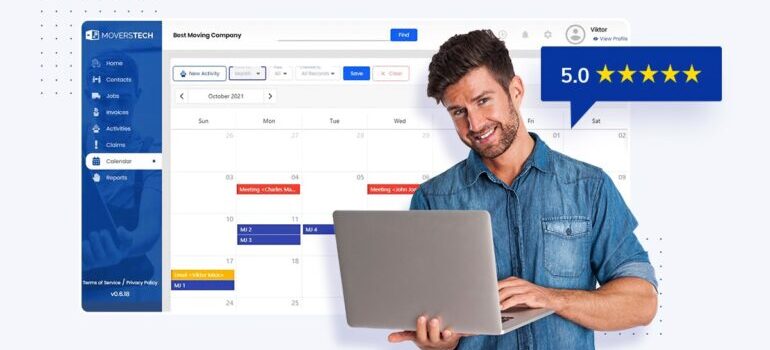
Dispatchers handle moving jobs more effectively by using moving software to organize schedules, track crews and trucks, manage changes in real time, and centralize communication. This reduces mistakes, prevents overlap, improves response time during delays, and helps dispatch teams keep daily operations organized and under control.
Dispatchers sit at the center of every moving job. They juggle crews, trucks, schedules, paperwork, and customer updates at the same time. A normal day can include last-minute job changes, traffic delays, crew availability issues, and customers asking for updates. When dispatching is handled manually, details slip. Crews get mixed up. Jobs overlap. Important messages get missed. This is where many dispatch challenges for moving companies begin. We will show you how to handle dispatch with moving software so dispatchers can organize information, track changes, and react faster during busy days without relying on scattered notes or constant calls. Tools like MoversTech CRM are one example of how dispatch teams can bring structure to daily operations. Let’s look at how dispatchers can streamline their day using moving software.
What are the main tasks of a moving dispatcher?
A moving dispatcher oversees every job from booking to completion. The role requires constant coordination and fast decision-making throughout the day. In practice, a dispatcher is responsible for the following tasks:
- Match crew skillsets to the right type of move
- Confirm driver availability and assign trucks
- Balance time windows so jobs do not overlap
- Adjust schedules when last-minute bookings appear
- Respond to traffic delays, vehicle issues, or crew absences
- Keep job notes, timing updates, and changes organized
Handling these tasks manually increases risk. A single delay can disrupt the entire moving dispatch process. When these issues repeat, they are clear signs your moving company needs a CRM, especially when memory, paper notes, or spreadsheets start creating confusion instead of clarity.
Dispatch teams that handle dispatch with moving software keep all job details in one place. Crew notes, timing updates, and job changes stay visible throughout the day. This allows dispatchers to adjust assignments earlier, reduce missed details, and keep operations moving during busy schedules.
How dispatchers manage daily operations during active moves
Once a move is underway, a dispatcher’s work shifts from planning to constant coordination. Every decision affects crews on the road, customer expectations, and the rest of the day’s schedule. When teams rely on structured tools such as dispatch software for moving companies, understanding how dispatchers manage daily operations during active moves will help you:
- Plan and balance daily schedules
- Monitor active jobs in real time
- Coordinate communication with crews and customers
- Review outcomes and improve future dispatch days

Plan and balance daily schedules
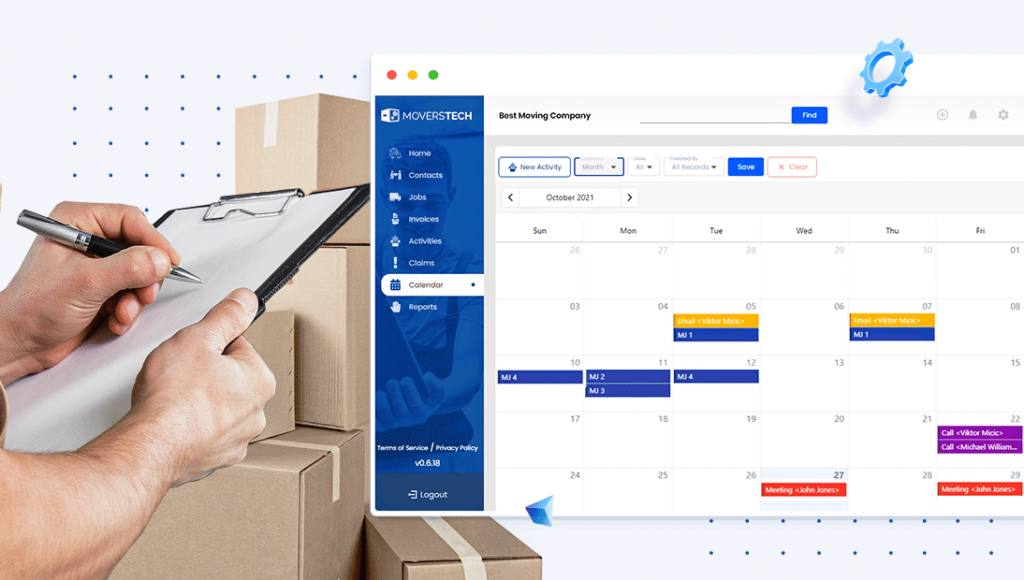
Planning is one of the most demanding parts of a dispatcher’s day. Schedules rarely stay fixed, crews call in late, and jobs take longer than expected. Traffic builds up without warning. Dispatchers must constantly adjust assignments while keeping the entire schedule balanced. This pressure sits at the center of the moving dispatch process and explains why manual planning often breaks down.
A dispatcher must assign the right crew to the right job. Some moves require experienced packers. Others need drivers familiar with long routes or tight delivery windows. One delay can push every job that follows. When dispatchers manage this with notes or spreadsheets, mistakes happen fast. Overbooked crews and missed time windows are common outcomes. This is where CRM helps manage moving crews, even when resources are limited and schedules change quickly. When dispatchers handle dispatch with moving software, workloads can be rebalanced earlier, schedules stay realistic, and daily operations move forward instead of falling behind.
Monitor active jobs in real time
Once crews are on the road, the dispatcher’s role shifts from planning to monitoring. This is when small issues can turn into major disruptions if they are not caught early. Traffic jams, loading delays, vehicle problems, or a crew falling behind schedule can affect several jobs in the same day. Managing this is a critical part of how moving dispatch works.
When updates depend on phone calls or text messages, information often arrives late or incomplete. A dispatcher may not learn about a delay until a customer calls asking where the crew is. The ability to handle dispatch with moving software gives dispatchers better visibility into active jobs throughout the day. Job progress and timing changes are easier to follow without constant back and forth.
Early awareness allows dispatchers to adjust schedules before problems spread. Crews can be reassigned. Customers can be updated sooner. Other jobs can be rescheduled calmly instead of rushed. This keeps the moving dispatch process under control during busy periods.
Coordinate communication with crews and customers
Clear communication is one of the hardest parts of dispatching. Dispatchers sit between crews in the field and customers waiting for updates. When messages are delayed or unclear, frustration builds quickly. Movers may work with outdated instructions. Customers may receive conflicting information. This remains one of the most common dispatch challenges for moving companies.
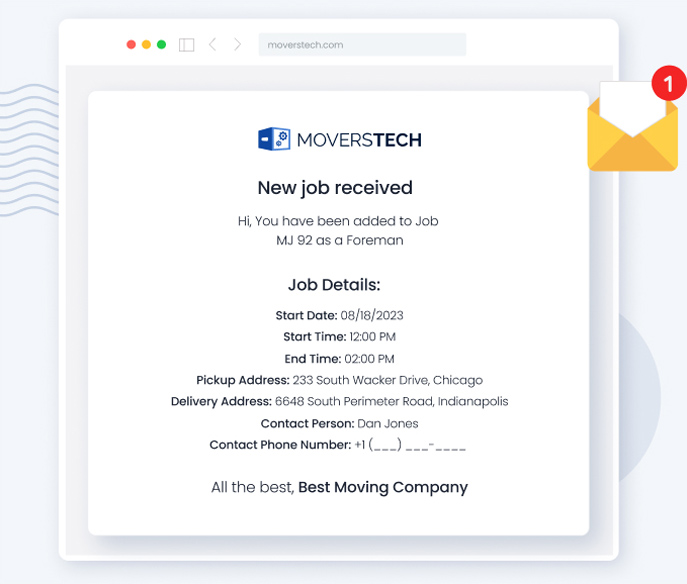
Crews need timely updates about addresses, access notes, and schedule changes. Customers expect accurate arrival windows and clear explanations when delays happen. Centralizing updates helps dispatchers maintain consistency in how to communicate with the customers, especially during busy moving days with multiple active jobs.
Tools like MoversTech CRM are often used in this context to support organized communication and job visibility without overwhelming dispatchers. When everyone works from the same information, crews stay aligned, and customers stay informed.
Review outcomes and improve future dispatch days
Dispatching does not end when the last truck returns. Each moving day creates valuable information that can improve the next one. Delays, missed time windows, and overloaded crews often repeat for the same reasons. Dispatchers who review these patterns gain better control over the moving dispatch process and reduce future disruptions.
When dispatchers review past jobs, ease of use matters. A user-friendly moving CRM makes it easier to look back at timelines, crew assignments, and delays without slowing daily work. Dispatchers can see where schedules were too tight, or routes caused problems, and adjust future planning accordingly.
Over time, this review process improves accuracy, reduces stress, and helps dispatchers create more predictable and manageable workdays.
How to help your dispatchers even more?
Tools alone do not solve dispatch problems. Dispatchers also need clear processes, shared standards, and access to the right information at the right time. Even teams that handle dispatch with moving software can struggle if expectations are unclear or job details are scattered.
Dispatchers should understand the full booking flow, from the first customer call to final delivery. Crew skillsets, equipment needs, and timing requirements must be easy to access during a busy day. When this information is missing, dispatch challenges for moving companies increase.
Strong internal support helps dispatchers stay calm when plans change. Clear procedures and shared job notes allow dispatchers to adjust schedules without rushing decisions, even on high-volume days.
Handle dispatch with moving software with clarity and control
Dispatching shapes how every moving day unfolds. Crews, trucks, schedules, and customer expectations all depend on clear coordination. This guide has shown how to handle dispatch with moving software in a way that supports real dispatcher workflows instead of adding complexity. CRM software helps teams replace guesswork with structure and respond faster when plans change. When dispatchers understand how to handle dispatch with moving software, they gain better visibility into crew availability, job timing, and active issues throughout the day. This makes it easier to manage delays, communicate clearly, and keep the moving dispatch process under control. Learning how to handle dispatch with moving software does not remove every challenge, but it gives dispatchers the tools and habits needed to manage busy schedules with more clarity and less stress.
